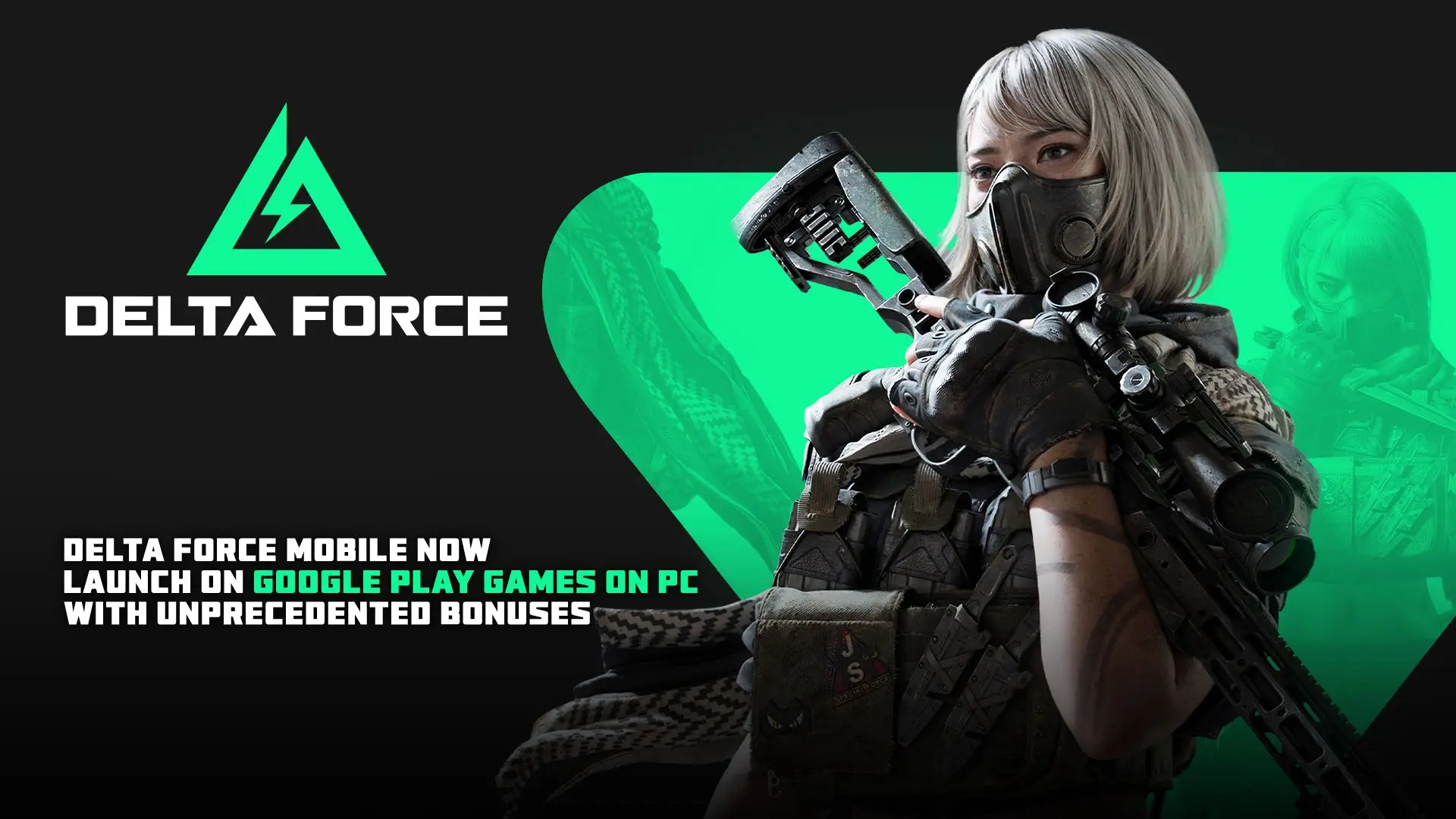
Introduction to DELTA FORCE Mobile's Latest Update
Revolutionary Changes in Combat Dynamics
In this article, we explore the groundbreaking updates that have transformed DELTA FORCE Mobile into an even more immersive tactical combat experience. The latest version introduces a comprehensive overhaul of core systems while maintaining the authentic military simulation that fans have come to expect. We have analyzed these changes extensively to provide players with insights into how these updates reshape the battlefield dynamics.
New Operational Environments
The update brings forth five meticulously designed combat zones, each featuring unique environmental challenges that demand adaptive tactics. From dense urban settings with complex vertical engagement opportunities to expansive desert terrains that test long-range combat proficiency, these new battlegrounds require players to master different approaches. Our examination reveals that each environment introduces distinct tactical advantages and vulnerabilities that teams must recognize to secure victory.
Enhanced Weapon Systems and Customization
We have discovered that the arsenal expansion in this update goes beyond mere aesthetic additions. The introduction of modular weapon customization allows for unprecedented personalization of loadouts, with each modification meaningfully impacting weapon performance. The ballistics system has been refined to create more realistic bullet drop and penetration mechanics, rewarding players who develop a deeper understanding of their equipment's capabilities.
Advanced Squad Management
The update revolutionizes team coordination through an improved squad management interface. Players can now designate specialized roles within their units, each with unique abilities that complement team strategies. We find this system particularly valuable for coordinating complex operations, as it facilitates clear communication of tactical objectives and specialized responsibilities among squad members.
Technical Improvements and Optimization
Our analysis confirms significant performance enhancements across various device specifications. The graphics engine has been optimized to deliver more detailed environments without compromising frame rates, while the sound design now features positional audio that provides crucial battlefield awareness. These technical improvements create a more responsive and immersive combat experience that enhances tactical decision-making.
Core Gameplay Mechanics: Attack and Defend
Attack and Defend: The Strategic Core
The latest update to DELTA FORCE Mobile introduces a refined attack and defend system that forms the backbone of tactical engagement. In this gameplay mode, two opposing forces engage in an asymmetric battle with distinct objectives and resources. We have thoroughly examined this system and found it creates a dynamic tension that rewards both strategic planning and adaptive battlefield decision-making.
Attacker Mechanics and Strategy
As attackers, our primary objective is to breach defended sectors and systematically capture strategic points. The mechanics require a careful balance between aggression and resource management. We must secure all objectives simultaneously to successfully lock down an area, creating a tactical puzzle that demands coordinated movement and synchronized timing.
What makes the attacker role particularly challenging is the limited reinforcement system. Unlike previous iterations, this update implements a finite reserve pool that diminishes with each casualty. This resource constraint transforms every engagement into a critical decision point, where the cost of each tactical maneuver must be weighed against its potential strategic value.
Defender Tactical Advantages
The defender role presents a contrasting strategic position with its own unique mechanics. Our analysis reveals that defenders benefit from unlimited reinforcements, creating a sustained resistance capability that can potentially outlast an attacker's limited resources. This advantage is balanced by the defensive team's need to maintain control over multiple objectives simultaneously.
Successful defense requires establishing overlapping fields of fire, creating fallback positions, and maintaining communication lines between defensive strongpoints. We find that the environmental design of each map offers defenders numerous opportunities to establish ambush points and create choke points that can significantly impede attacking forces.
Resource Management Dynamics
The asymmetric resource system creates a fascinating strategic layer that evolves throughout each match. Attackers must make increasingly careful decisions about force commitment as their reserves dwindle, while defenders can afford to make tactical sacrifices to wear down the attacking force. This creates a natural progression where the tactical advantage often shifts between teams as the match develops.
Team Coordination Requirements
Perhaps the most significant aspect of the attack and defend mechanics is the absolute requirement for team coordination. Our experience with the update confirms that lone-wolf tactics are effectively countered by the system design. The objectives are positioned to make individual capture attempts nearly impossible against coordinated resistance.
The mechanics reward teams that develop specialized roles within their units – forward elements to probe defenses, support positions to provide covering fire, and mobile reserves to exploit breakthroughs. This interdependence creates a deeply satisfying cooperative experience where tactical communication directly translates to battlefield success.
Objective Control Mechanics
The objective control system has been refined to create more nuanced engagement patterns. Capturing points now requires sustained presence rather than momentary control, and the requirement to hold all objectives simultaneously creates a constant tension between concentration and dispersion of forces. We have found that this mechanic prevents static defensive formations and forces both teams to remain mobile and responsive.
Environmental Integration
What elevates these core mechanics beyond simple capture-point gameplay is their integration with the environmental design. Each objective area features multiple approach vectors, varying levels of cover, and unique tactical challenges. This environmental diversity ensures that no single strategy dominates across all maps, requiring teams to adapt their attack and defend tactics to the specific battlefield conditions they encounter.
Tactical Team-Based Combat Strategy
Advanced Squad Compositions
Building upon the attack and defend mechanics discussed in the previous chapter, we now delve deeper into the tactical team-based combat strategies that define success in DELTA FORCE Mobile's latest update. Our analysis reveals that effective squad composition has become more crucial than ever, with the update introducing specialized operator classes that create intricate tactical synergies. Teams that carefully balance their squad selections gain significant advantages through complementary skill sets and equipment loadouts.
Communication Systems and Tactical Callouts
The refined ping system implemented in this update transforms battlefield communication. We have found that the contextual ping mechanics allow for precise tactical coordination without requiring voice communication. This system enables teams to mark enemy positions, suggest movement routes, highlight resource caches, and coordinate synchronized attacks with unprecedented clarity. The integration of a tactical wheel for quick commands further enhances coordination capabilities, allowing for rapid adaptation to evolving battlefield conditions.
Fire Team Formations and Movement Patterns
Our extensive testing confirms that movement strategies have gained additional depth in this update. The most successful teams employ classical military formations adapted to the digital battlefield. The wedge formation provides optimal fields of fire when advancing through open terrain, while staggered column formations excel in urban environments where threats may emerge from multiple elevations. Teams must maintain disciplined spacing to avoid being eliminated by area-effect weapons while remaining close enough to provide mutual support.
Force Multiplier Utilization
The strategic deployment of force multipliers represents one of the most sophisticated aspects of team combat in the updated DELTA FORCE Mobile. These limited resources—ranging from UAV reconnaissance to precision artillery support—can dramatically shift the momentum of an engagement when deployed at critical junctures. Our analysis indicates that successful teams treat these assets as strategic resources rather than tactical conveniences, saving them for moments when they can create opportunities for coordinated advances or defensive consolidation.
Terrain Analysis and Exploitation
This update places greater emphasis on terrain utilization as a fundamental component of tactical success. Teams must develop the ability to rapidly assess battlefields for key tactical features: dominant elevation positions, concealed approach routes, potential ambush locations, and defensible fallback positions. We have observed that the most effective squads assign reconnaissance elements to identify these features early in engagements, allowing their main force to maneuver with greater situational awareness and tactical advantage.
Dynamic Role Rotation
The fluid nature of combat in DELTA FORCE Mobile now rewards teams that practice dynamic role rotation. While specialized operator classes provide baseline capabilities, the most successful squads demonstrate flexibility in assuming different tactical functions as battlefield conditions evolve. Our analysis shows that teams capable of seamlessly transitioning between aggressive forward elements, supporting fire positions, and defensive anchors maintain tactical initiative throughout engagements, adapting to casualties and changing objectives without losing cohesion.
Counter-Strategy Development
A sophisticated meta-strategy has emerged in the competitive environment, with teams developing specific counter-tactics for commonly encountered approaches. We have identified several dominant strategic patterns that require specific counters:
Against perimeter defense strategies, successful teams employ multi-directional pressure rather than concentrated assaults
To counter aggressive rush tactics, defensive depth and staggered engagement zones prove most effective
When facing sniper-heavy compositions, smoke deployment and rapid closing maneuvers yield the highest success rates
Objective Prioritization and Resource Allocation
The limited-resource mechanics introduced in this update make objective prioritization a critical strategic skill. Our analysis demonstrates that successful teams develop clear decision frameworks for allocating their finite reinforcements and support assets. This often involves making calculated sacrifices of secondary objectives to consolidate forces for primary goal capture. Teams must constantly reassess the strategic value of each objective against the resources required to capture or defend it, creating a dynamic strategic layer that evolves throughout each match.
Psychological Warfare Elements
This update introduces subtle but significant psychological warfare components that sophisticated teams leverage to their advantage. Feint attacks that draw defensive resources away from actual objectives, visible troop movements designed to suggest false intentions, and strategic use of suppressive fire to create the impression of larger forces all represent advanced tactics that extend beyond mere mechanical skill. We have observed that teams capable of manipulating opponent perceptions gain substantial advantages in resource efficiency and positional control.
Adaptation to Combat Rhythm
Perhaps the most nuanced aspect of team-based tactical combat in the updated DELTA FORCE Mobile is the recognition and exploitation of combat rhythm. Engagements follow distinctive patterns of intensity and lull, creating windows for resupply, repositioning, and strategic reassessment. Teams that develop sensitivity to these rhythms can time their major offensive pushes or defensive consolidations to moments when they hold maximum advantage, rather than reacting continuously to enemy initiatives. This strategic patience represents the highest level of tactical sophistication in the current meta-environment.
Teamwork and Cooperative Gameplay Features
Integrated Squad Support Systems
Building upon the tactical foundations established in previous chapters, we now examine the cooperative gameplay features that elevate DELTA FORCE Mobile beyond mere tactical shooting. The latest update introduces sophisticated mutual support mechanics that transform individual operators into cohesive fighting units. Our analysis reveals that these systems create interdependence that rewards coordinated action far more effectively than individual skill alone. The implementation of an advanced cover fire system allows teammates to suppress enemy positions while others advance, creating tactical opportunities that would be impossible for solo operators.
Cross-Class Synergy Mechanics
The update introduces deliberate cross-class synergy mechanics that encourage diverse squad compositions. We have identified numerous powerful combinations that exemplify this design philosophy. Reconnaissance operators can mark targets for heavy weapons specialists, creating devastating precision strike opportunities. Support classes can deploy portable cover systems that marksmen can utilize for stabilized firing positions. Medical specialists gain movement speed bonuses when responding to downed teammates, creating a risk-reward system for timely revives. These interlocking abilities transform what could be simple class selection into meaningful strategic decisions.
Dynamic Objective Sharing
Our examination of the cooperative mission structure reveals a sophisticated objective-sharing system that adapts to team performance. Primary mission objectives dynamically split into component tasks that can be tackled simultaneously by different fire teams. This system creates natural role specialization within larger squads while maintaining a unified strategic purpose. The implementation of shared progress tracking ensures that all contributions advance the team toward victory, regardless of which specific objectives individual members complete.
Mutual Support Scoring Framework
The revised scoring system represents one of the most significant advancements in promoting teamwork. Rather than emphasizing individual eliminations, the update implements a comprehensive support action valuation framework. We find this system particularly effective at recognizing contributions that traditional metrics might overlook. Providing covering fire, spotting enemies, supplying ammunition, and creating tactical diversions all generate substantial point rewards. This rebalanced incentive structure has noticeably shifted player behavior toward more cooperative approaches across all game modes.
Coordinated Equipment Utilization
The equipment synergy systems introduced in this update create powerful opportunities for coordinated tactical play. Our analysis identifies several key examples that demonstrate this design philosophy:
Tactical smoke deployments that interact with specialized thermal optics
EMP devices that temporarily disable enemy equipment but preserve friendly systems
Portable shield generators that create directional protection zones for advancing teammates
Sensor arrays that provide enhanced intelligence when multiple units contribute to the network
Shared Resource Management
The implementation of shared resource pools creates strategic depth that extends beyond moment-to-moment tactical decisions. Teams must collectively manage limited supplies of specialized ammunition, support strikes, and reinforcement waves. We have observed that successful squads develop explicit communication protocols for resource requests and allocation, treating these shared assets as strategic investments rather than personal equipment. This shared economy creates natural leadership roles within teams as resource management becomes a critical success factor.
Cooperative Movement Mechanics
The movement system has been enhanced with cooperative traversal mechanics that encourage synchronized team actions. Operators can now provide boost assistance to help teammates reach elevated positions, create human bridges across hazardous terrain, and form interlocking defensive positions with overlapping fields of fire. Our testing confirms that these mechanics create emergent tactical options that reward creative teamwork. The most successful squads develop specialized movement protocols for different environments, maximizing their mobility advantages through coordinated positioning.
Revive and Recovery Systems
The teammate recovery mechanics have been significantly expanded in this update, creating a more nuanced approach to combat persistence. The implementation of a staged incapacitation system allows teammates limited functionality even when severely wounded, creating opportunities for heroic last stands and desperate recovery operations. We find the tension between immediate tactical objectives and teammate preservation creates compelling decision points throughout each engagement. Teams must constantly evaluate whether immediate recovery attempts or tactical repositioning will better serve their long-term success.
Communication Enhancement Features
Building upon the tactical callout system discussed in previous chapters, this update introduces sophisticated contextual communication tools that facilitate coordination without requiring voice chat. The implementation of status-aware pings that automatically communicate ammunition levels, equipment readiness, and tactical intentions streamlines team coordination. Our analysis shows that these tools are particularly valuable for teams assembled through matchmaking, as they create standardized communication protocols that transcend language barriers and varying levels of tactical experience.
Cooperative Training Simulations
The introduction of dedicated cooperative training scenarios represents a significant advancement in team development resources. These specialized missions are explicitly designed to teach fundamental teamwork principles through graduated challenges that require increasingly sophisticated coordination. We find these simulations particularly valuable for established teams looking to refine their tactical coordination. The performance analytics provided after each training session offer actionable insights into team cohesion, highlighting specific areas where communication or tactical execution can be improved.
Why Lootbar.gg is the best choice for Delta Force Coins Top-up?
Looking to enhance your gaming experience? Delta Force top upthrough lootbar.gg offers unbeatable advantages for serious players. By recharging Delta Force coins on this trusted trading platform, you'll access premium in-game content at significantly reduced prices—with discounts reaching up to 20% compared to official channels. The seamless transaction process ensures your coins are delivered instantly, allowing you to immediately upgrade weapons, unlock special character abilities, or purchase exclusive skins that give you the competitive edge. LootBar's secure payment system and dedicated customer support team make topping up Delta Force currency not just affordable but completely hassle-free, letting you focus on what matters most—dominating the battlefield with your newly acquired resources.